
Jamaica’s National Heroes
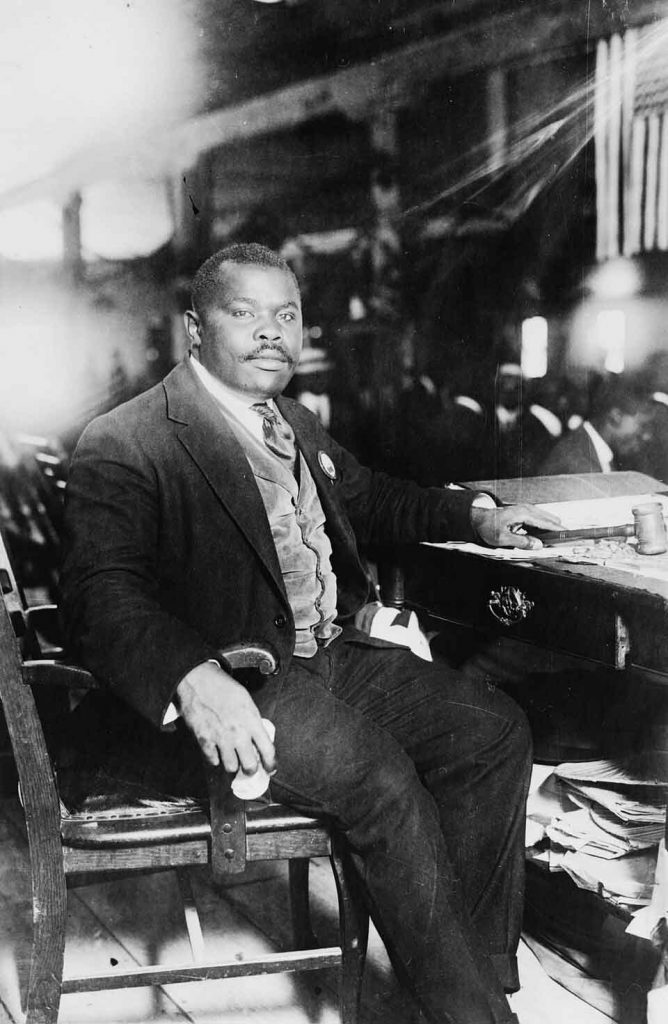
By from George Grantham Bain Collection – This image is available from the United States Library of Congress’s Prints and Photographs divisionunder the digital ID cph.3a03567. Licensing: Public Domain; Creative Commons Attribution 2.0 Generic license.@ wikimedia commons
Marcus Garvey:
A Visionary for Freedom and Empowerment
Marcus Mosiah Garvey is one of Jamaica’s most influential national heroes, renowned for his transformative vision of Black pride, unity, and self-determination. Born in St. Ann, Jamaica, in 1887, Garvey’s work went far beyond the borders of his home island, shaping the global conversation on racial equality and empowerment for African descendants. As a visionary leader, Garvey founded the Universal Negro Improvement Association (UNIA) in 1914, an organization dedicated to uplifting people of African descent around the world through education, economic independence, and the promotion of Pan-African unity.
Garvey’s message was clear: Black people should embrace their heritage, build strong communities, and assert their rights. His most famous slogan, “Up You Mighty Race, You Can Accomplish What You Will,” inspired millions across the globe. Through the UNIA, he launched various initiatives, including the establishment of the Black Star Line, a shipping company designed to facilitate trade between Black people across the Americas, Africa, and the Caribbean.
Despite facing immense opposition, including being jailed and eventually deported from the United States, Garvey’s legacy endured. He is credited with igniting the Pan-African movement and fostering a sense of pride and unity among people of African descent worldwide. Today, his vision continues to resonate, as his message of empowerment, self-reliance, and cultural pride remains central to the fight for justice and equality.
Marcus Garvey’s courage, intellect, and unwavering belief in the potential of Black people make him a true icon of Jamaica’s national identity and a hero whose influence reverberates through history.
George William Gordon:
George William Gordon, born in 1820 in Jamaica, stands as a steadfast symbol of courage, resilience, and advocacy for the oppressed. Gordon was a visionary who sought to dismantle the racial and economic inequalities that plagued Jamaican society during the 19th century. Born to a Scottish father and an enslaved mother, Gordon experienced firsthand the brutal realities of colonialism, racism, and class discrimination. However, his mixed heritage gave him a unique position within Jamaican society, and he leveraged it to become an advocate for the disenfranchised.
A successful businessman, Gordon was also a passionate politician, serving as a representative in the Jamaican Assembly. However, it was his outspoken criticism of the colonial government’s treatment of the poor and enslaved that truly defined his legacy. Gordon became an outspoken advocate for the rights of the Black population, challenging the oppressive policies that denied them political representation and fair treatment. His voice resonated particularly with the poor and disenfranchised, and he was instrumental in calling for greater social and economic justice.
Gordon’s role in the Morant Bay Rebellion of 1865 solidified his place in history. He was a vocal critic of the British colonial administration’s harsh treatment of the people of Jamaica, particularly after the rebellion erupted in response to the injustices faced by the Jamaican peasantry. Although Gordon was not directly involved in the violence of the rebellion, he was arrested, tried, and executed for allegedly inciting the uprising. His execution became a powerful symbol of the oppressive colonial system, and he is remembered as a martyr for the cause of Jamaican liberty and equality.
Today, George William Gordon is honored as a National Hero of Jamaica for his unwavering commitment to justice, his fight against colonial oppression, and his sacrifice in the name of equality and human rights.
A Champion of Justice and Equality
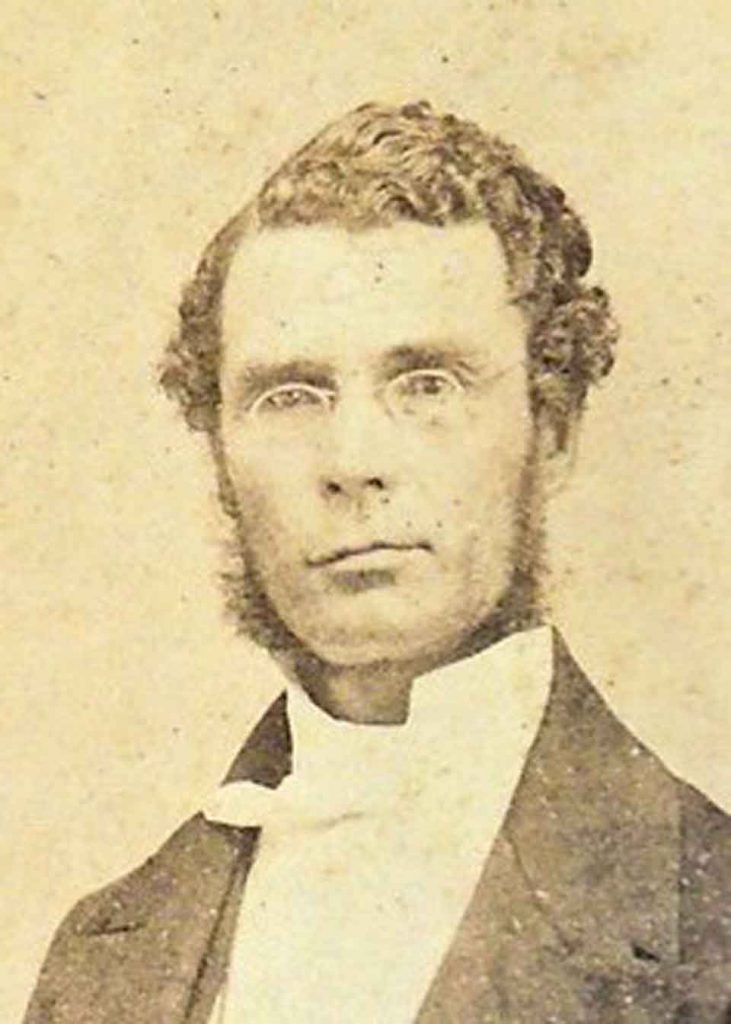
Unknown author – from a photography album in the Graphic Arts Collection documenting the Morant Bay Rebellion in Jamaica (1865), the Indian Northwest Frontier Hazara Campaign (1867-1870), views of Malta, Ireland, Guernsey, Spain, and elsewhere, compiled [attributed to] by Alexander Dudgeon Gulland. Public Domain under Creative Commons Attribution 2.0 Generic license.
Paul Bogle:
Paul Bogle, born in 1822 in the parish of St. Thomas, Jamaica, is remembered as one of the island’s most courageous leaders in the fight for justice and equality. As a prominent figure in the Morant Bay Rebellion of 1865, Bogle became a symbol of resistance against the oppressive colonial system that denied the Jamaican peasantry their rights and freedom.
Bogle was a deeply spiritual man, initially working as a deacon in his church. However, his concern for the welfare of the poor and disenfranchised in his community led him to take up the cause of justice. During the mid-19th century, many Jamaicans, particularly the Black population, lived under harsh conditions with little access to political representation or fair treatment. The colonial government, led by the British, imposed taxes and laws that worsened the lives of the working class, while the people suffered from extreme poverty and lack of opportunity.
In 1865, after numerous petitions were ignored by the British authorities, Bogle led a peaceful march to the Morant Bay courthouse to protest the unjust treatment of the Jamaican peasantry. The protest, initially peaceful, turned into an uprising when colonial forces responded with excessive violence. The event quickly escalated, resulting in a brutal crackdown by the colonial government. Bogle was arrested, tried, and later executed by hanging, along with many others who were involved in the uprising.
Although the rebellion itself was crushed, Paul Bogle’s actions and his sacrifice became a powerful catalyst for change. His martyrdom ignited widespread outrage and led to significant reforms in the island’s governance, including the eventual introduction of a more representative form of government. Bogle is remembered as a national hero who fought for justice, freedom, and equality, and his legacy continues to inspire Jamaicans today.
Paul Bogle’s courage, leadership, and dedication to the cause of the oppressed make him a symbol of resistance and a proud part of Jamaica’s history. His bravery in standing up for the rights of the Jamaican people earned him a place among the nation’s most celebrated heroes.
A Martyr for Freedom and Justice
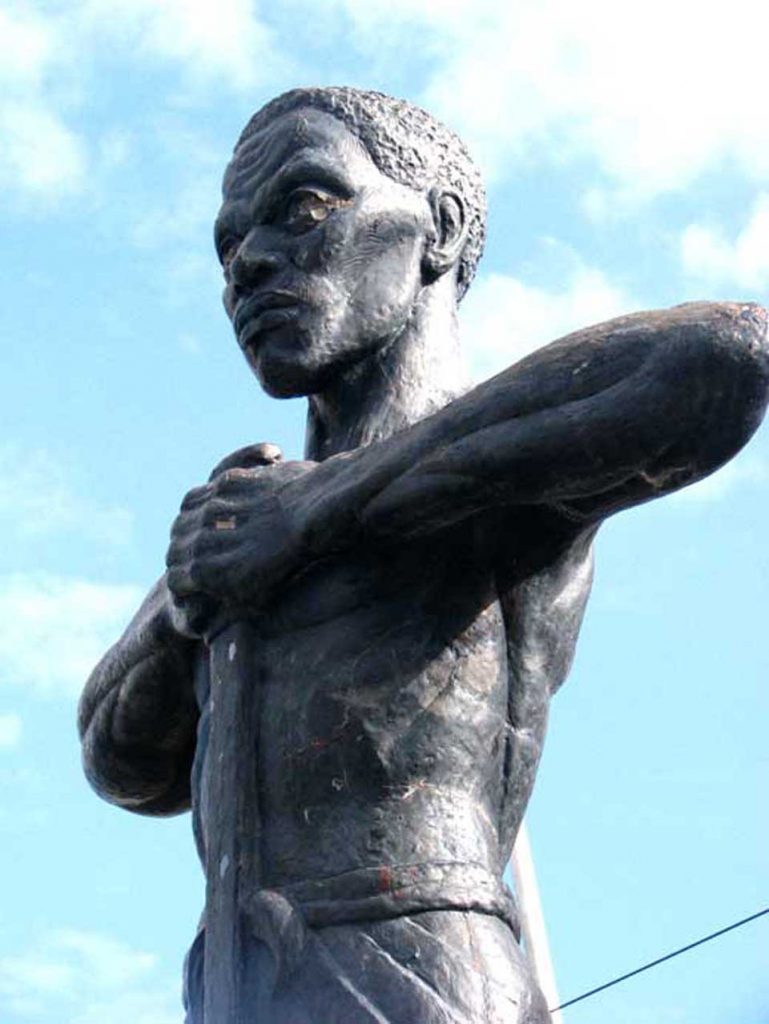
Paul Bogle statue, Morant Bay, Jamaica. Public Domain; Creative Commons Attribution 2.0 Generic license. @ wikimedia commons
Sir Alexander Bustamante:
Sir Alexander Bustamante, born William Alexander Clarke on February 24, 1884, in the parish of Hanover, is celebrated as one of Jamaica’s most prominent National Heroes. A visionary leader, Bustamante was pivotal in the fight for workers’ rights and independence, making indelible contributions to the social and political landscape of Jamaica.
Bustamante’s early life was marked by a deep sense of justice and an unwavering commitment to the well-being of the Jamaican people. He rose to prominence as a labor leader and activist in the early 1930s when Jamaica was facing severe economic hardship and social inequality under British colonial rule. As a businessman with an understanding of the struggles faced by ordinary Jamaicans, he became a vocal advocate for workers’ rights, pushing for better wages, improved working conditions, and the right to unionize.
In 1938, Bustamante played a key role in the 1938 labor riots, which were a direct response to the dire economic conditions and exploitation of the working class. His leadership during this period solidified his place as a champion for the oppressed. Bustamante founded the Bustamante Industrial Trade Union (BITU), which became one of the most influential labor unions in the country, working to advance the rights of Jamaican workers and improve their living conditions.
In 1944, Bustamante helped to establish Jamaica’s first universal adult suffrage system, empowering all Jamaicans—regardless of race, class, or gender—to have a voice in electing their government. This was a landmark moment in Jamaica’s political history, as it moved the island closer to full self-governance. In 1962, Bustamante became the first Prime Minister of Jamaica after the country gained independence from Britain. His leadership was instrumental in shaping Jamaica’s political and economic structure during its early years as an independent nation.
Bustamante’s legacy extends far beyond his political achievements. As a founder of the Jamaica Labour Party (JLP), he played an essential role in shaping the country’s democratic ideals and its vision for a prosperous future. His contributions to the development of Jamaica, his dedication to social justice, and his fierce advocacy for the rights of workers have earned him the title “The Father of Modern Jamaica.” His dedication to uplifting the Jamaican people, combined with his role in securing the country’s independence, has left an enduring impact on the nation.
The Father of Modern Jamaica
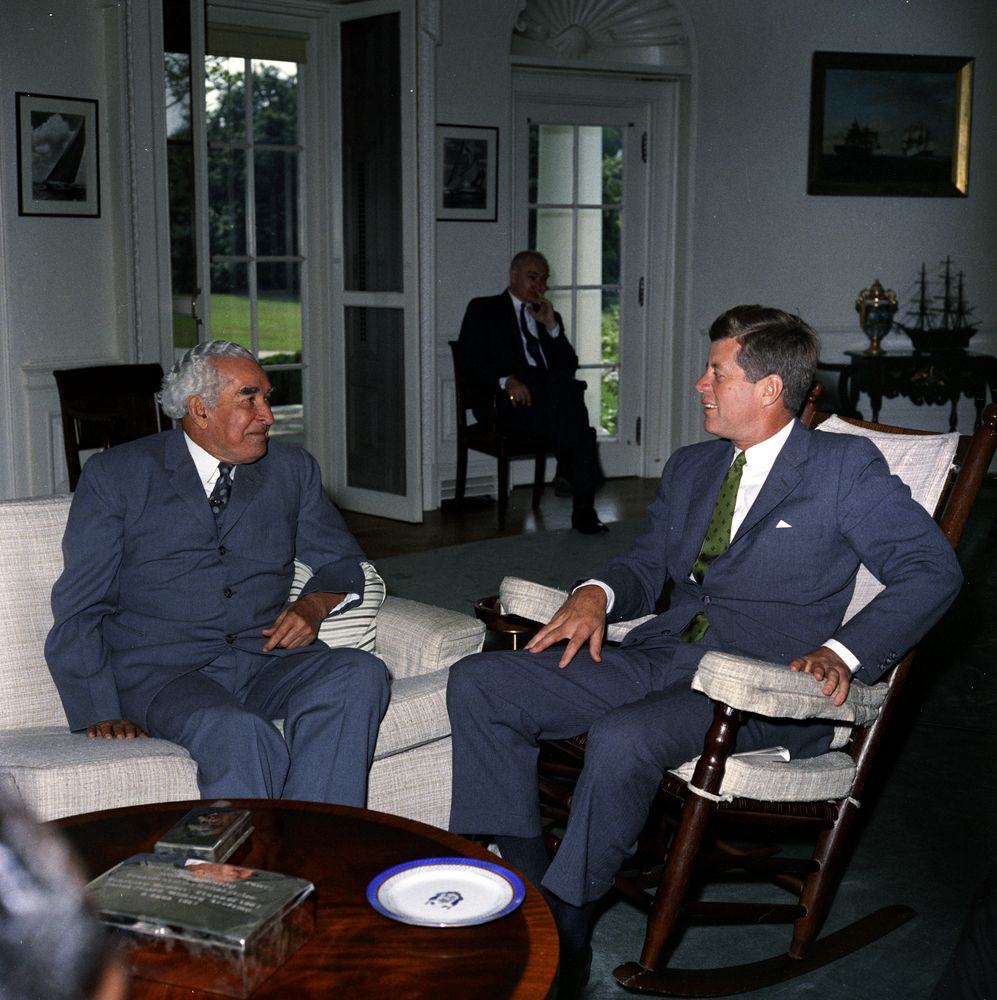
President John F. Kennedy (in rocking chair) meets with Prime Minister of Jamaica, Sir Alexander Bustamante. Seated in background is Deputy Chief of Protocol, William J. Tonesk. Oval Office, White House, Washington, D.C. – Robert Knudsen. White House Photographs. John F. Kennedy Presidential Library and Museum, Boston – This work is in the public domain in the United States because it is a work prepared by an officer or employee of the United States Government as part of that person’s official duties under the terms of Title 17, Chapter 1, Section 105 of the US Code.
Hon. Norman Manley:
The Honorable Norman Manley, born on July 4, 1893, in the parish of Manchester, Jamaica, is celebrated as one of the nation’s greatest political leaders and thinkers. Manley played an instrumental role in Jamaica’s path to independence, shaping the country’s political, social, and economic future in profound ways. His contributions to Jamaica’s governance earned him the title of “The Father of Jamaican Independence.”
A brilliant student, Manley attended Jamaica College and later studied at Oxford University in England. His education and exposure to global ideas would serve as the foundation for his leadership in the 20th century. Returning to Jamaica, Manley became an influential figure in the political landscape, joining the People’s National Party (PNP) in 1938, a political organization that would later lead the charge for Jamaica’s independence.
Manley’s political career was defined by his commitment to social justice and equality. As the leader of the PNP, he worked tirelessly to promote democratic ideals and ensure that all Jamaicans—regardless of their race or economic status—could participate in the island’s political and economic life. He was a fierce advocate for education, labor rights, and land reform, seeking to address the systemic inequalities that had long plagued the island.
In 1944, Manley was instrumental in securing universal adult suffrage, granting all adult Jamaicans the right to vote for the first time. This monumental change laid the groundwork for Jamaica’s self-governance. As Premier of Jamaica from 1955 to 1962, Norman Manley continued to push for full independence from Britain, leading negotiations that would eventually culminate in Jamaica’s independence on August 6, 1962.
Though he did not become the nation’s first Prime Minister (a role taken by his cousin, Sir Alexander Bustamante), Manley’s legacy as one of the central figures in the creation of modern Jamaica is undeniable. His work in strengthening the country’s political institutions, advocating for social reform, and his vision for a unified, independent Jamaica make him one of the nation’s most honored heroes. Manley passed away on September 2, 1969, but his influence continues to shape Jamaica’s identity as a proud, self-sufficient nation.
Architect of Jamaica’s Independence
Chief Minister of Jamaica (1893-1969)
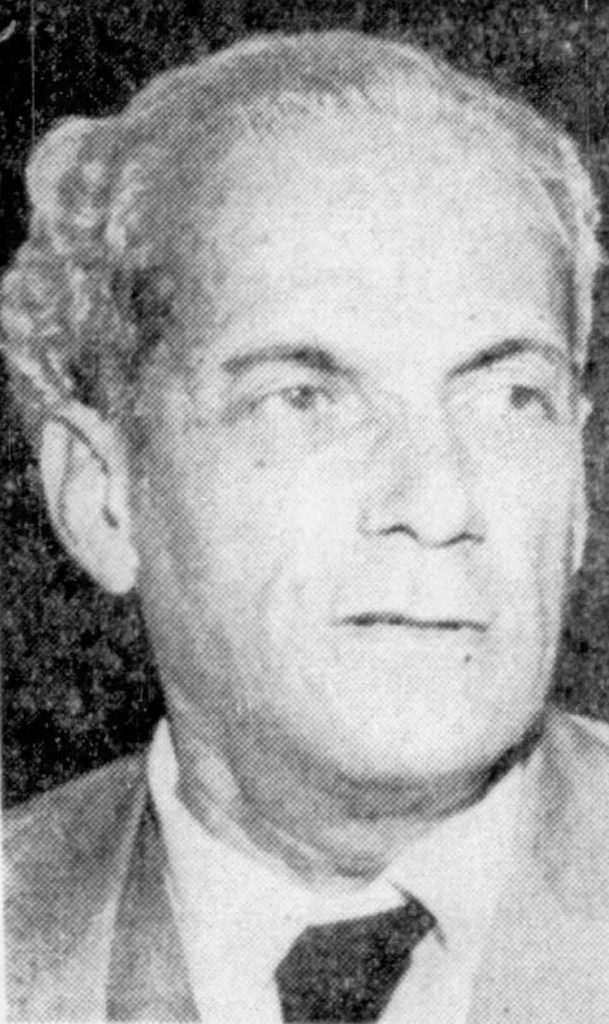
This file is in the public domain because it is a mere mechanical scan or photocopy of a public domain original, or – from the available evidence of it was published in the United States between 1930 and 1963, and although there may or may not have been a copyright notice. Paul Bogle statue, Morant Bay, Jamaica. Public Domain; Creative Commons Attribution 2.0 Generic license. @ wikimedia commons
Nanny of the Maroons:
Nanny of the Maroons, born in the early 18th century in what is now Ghana, West Africa, is one of Jamaica’s most celebrated National Heroes, known for her leadership, courage, and dedication to the fight for freedom. Nanny is often regarded as a symbol of resistance and empowerment for enslaved Africans and is a central figure in Jamaica’s history of liberation.
Captured and brought to Jamaica as an enslaved person, Nanny escaped the brutal plantation system and found refuge in the mountainous interior of Jamaica, where she became the leader of the Maroons—a group of escaped slaves who formed independent communities. She led the Maroons in a series of successful wars of resistance against the British colonial forces, particularly in the 18th century, when the British sought to subdue the Maroons and force them back into slavery.
Nanny’s leadership in the First Maroon War (1728–1740) was instrumental in securing the Maroons’ freedom. Under her guidance, the Maroons not only defended their territory in the Blue Mountains but also negotiated a treaty with the British in 1739, granting the Maroons autonomy in exchange for their promise to stop harboring runaway slaves. This peace agreement marked a significant victory for Nanny and her people, as it ensured the preservation of Maroon communities and their right to live in freedom, far from the reach of colonial authority.
Nanny is remembered not only for her military prowess but also for her spiritual and cultural leadership. She was known for her wisdom and for guiding the Maroons in preserving their African heritage, traditions, and values. Her legendary status was cemented by stories of her supernatural abilities, and she is often depicted as a powerful figure capable of performing miraculous feats.
Today, Nanny’s legacy as a fierce protector of freedom and as a leader of the Maroons continues to inspire Jamaicans and people of African descent around the world. Her courage, resilience, and unyielding commitment to the fight for freedom make her an enduring symbol of liberation, empowerment, and the indomitable spirit of the Jamaican people.
The Warrior Queen of Jamaica
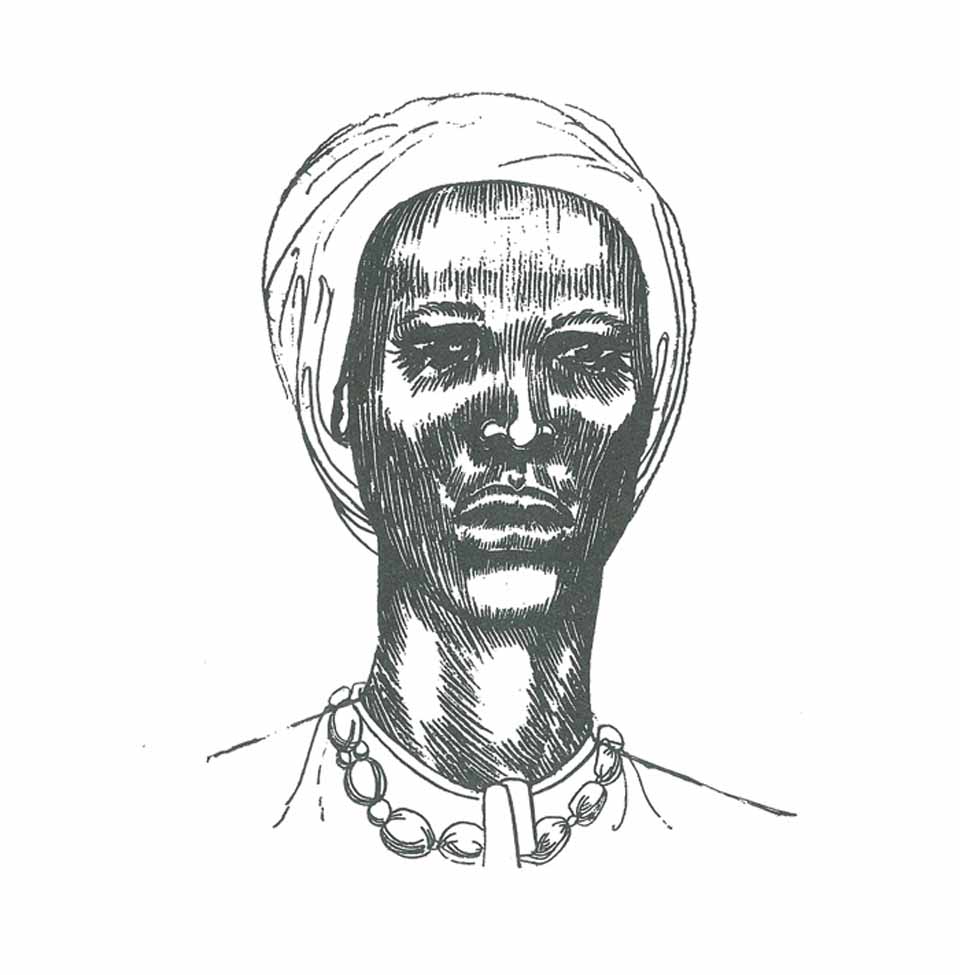
This file is in the Public Domain; for puplic use; Unknown artist – All credits and Rights Reserved @The Jamaica Information Services
Robert Nesta Marley:
The Global Ambassador of Reggae
(commonly known as Bob Marley)
Robert Nesta Marley, born on February 6, 1945, in Nine Mile, St. Ann, Jamaica, is an international icon and one of the most influential musicians of the 20th century. Widely known as Bob Marley, he became a global ambassador for reggae music, spreading its message of peace, love, and unity to every corner of the world.
Bob Marley’s musical career began in the early 1960s with the formation of the Wailers, a group that would go on to redefine reggae music. Their distinctive sound, which blended elements of rock, soul, and traditional Jamaican music, was revolutionary. Marley’s songwriting was not just about melody; it was about delivering powerful messages of social change, justice, and resistance against oppression. Songs like “No Woman, No Cry,” “Redemption Song,” “One Love,” and “Buffalo Soldier” resonate with themes of freedom, equality, and the empowerment of marginalized people.
As a political and cultural figure, Bob Marley used his music as a platform to speak out against the injustices faced by the poor, the oppressed, and people of African descent worldwide. His music became anthems for liberation movements and a source of strength for people fighting against colonialism, racism, and inequality. Marley’s most famous album, “Catch a Fire” (1973), marked the international breakthrough of reggae, cementing his place as one of the world’s greatest musicians.
Beyond his musical impact, Bob Marley’s commitment to his Rastafarian beliefs and his message of peace, unity, and social justice has left an indelible mark on culture worldwide. He became a symbol of resistance and resilience, embodying the spirit of the oppressed and encouraging people to unite for a common cause. In 1978, he famously helped broker peace during the political unrest in Jamaica, bringing together warring factions for a concert known as the One Love Peace Concert.
Despite his untimely death from cancer in 1981 at the age of 36, Bob Marley’s legacy endures through his music, his message, and the global impact he had on culture, politics, and the world’s music scene. His influence continues to inspire new generations of artists, activists, and fans who carry his message forward.
In recognition of his contributions to music and his advocacy for social change, Bob Marley was posthumously awarded the Order of Merit (O.M.) by the Jamaican government in 1981. He remains a beloved figure, not just in Jamaica, but across the world, a true hero whose impact transcends borders.
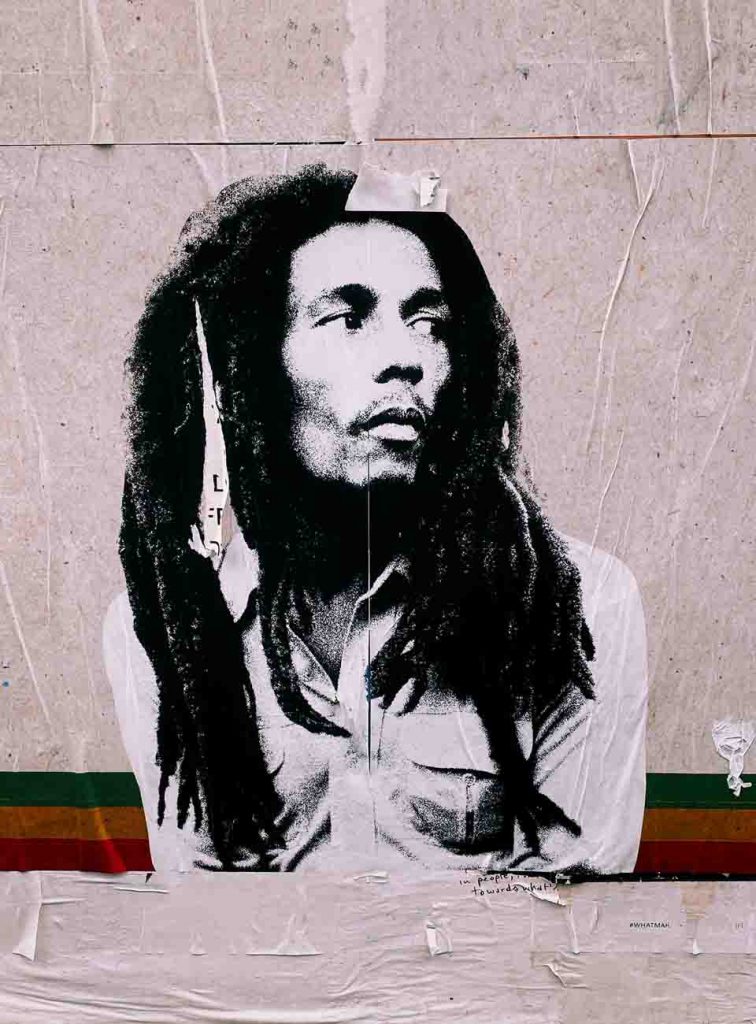
Video @ Youtube LLC.
Photo Jon Tyson @unsplash
Samuel Sharpe:
Samuel Sharpe, also known as Daddy Sharpe, is honored as one of Jamaica’s most courageous National Heroes for his pivotal role in the fight against slavery. Born in 1801 in the parish of St. James, Sharpe was an enslaved man who rose to become a Baptist deacon—respected in his community for his intelligence, leadership, and deep commitment to justice. His influence extended far beyond the church walls, as he used his role to organize, educate, and uplift fellow enslaved Africans during one of the darkest periods of Jamaica’s history.
Sharpe believed passionately that all people were created equal and that freedom was a divine right. His convictions led him to play a central leadership role in the Baptist War, also known as the Christmas Rebellion of 1831, one of the largest and most significant slave uprisings in the Caribbean. Sharpe and other leaders organized a peaceful resistance movement, calling for a work stoppage as a form of protest against the brutal system of slavery. However, when plantation owners refused to negotiate, the protest escalated into a widespread rebellion across western Jamaica.
Although the uprising was eventually suppressed, Samuel Sharpe’s actions shook the foundations of the colonial slave system. His bravery and leadership exposed the cruelty of slavery to the British public and greatly accelerated the movement toward emancipation. Sharpe was captured and executed in May 1832, but not before he boldly declared his famous words: “I would rather die upon yonder gallows than live in slavery.” This statement became a lasting symbol of resistance and the unbreakable human desire for freedom.
Just one year after his death, in 1833, the British Parliament passed the Slavery Abolition Act, leading to the emancipation of enslaved people throughout the British Empire. Sharpe’s sacrifice and leadership are widely credited as major catalysts for this monumental change.
Today, Samuel Sharpe is remembered as a national hero whose courage, moral conviction, and unwavering fight for human dignity helped transform Jamaica’s history. His legacy stands as a powerful reminder that one voice, fueled by justice and courage, can change the course of a nation.
The Freedom Fighter Who Sparked Emancipation
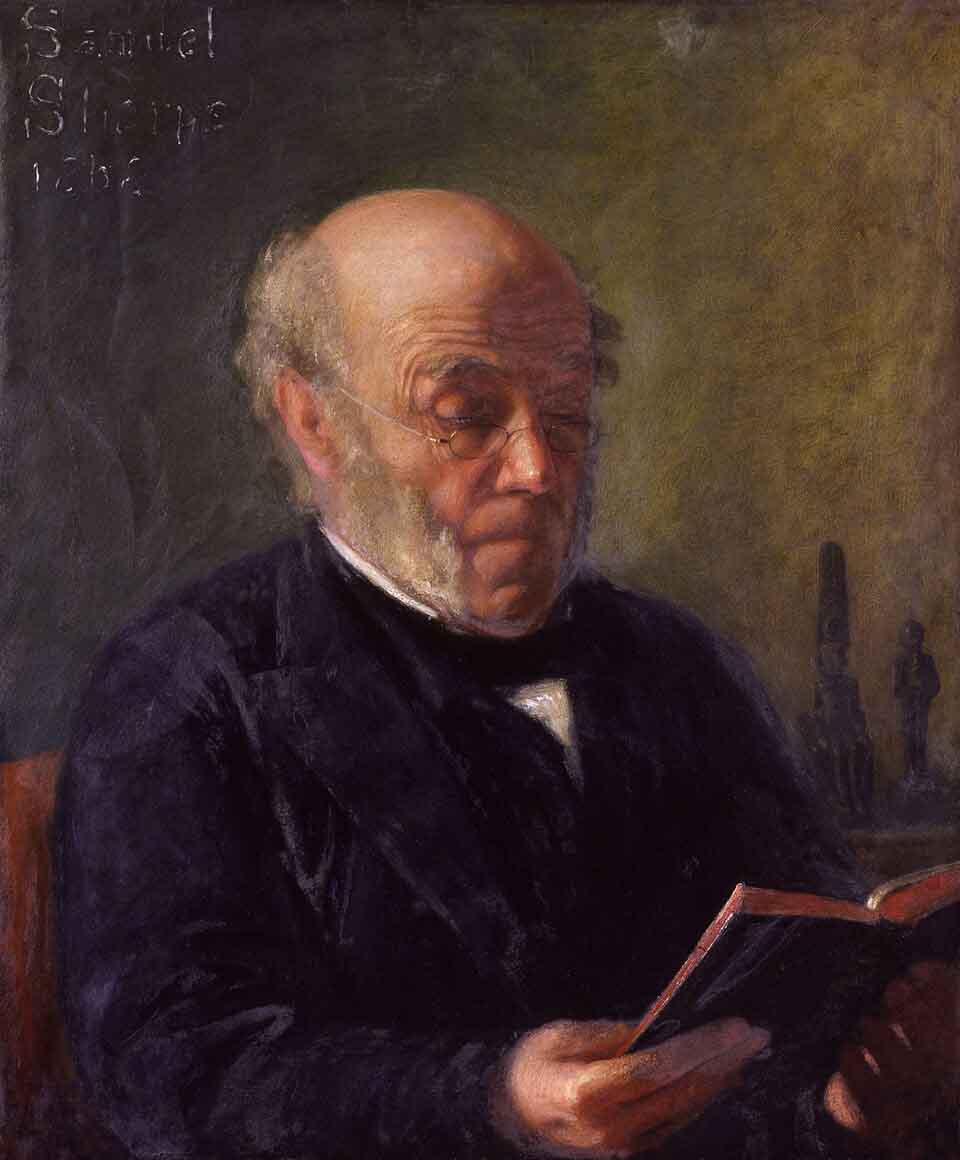
Samuel Sharpe by Matilda Sharpe – Public Domain (in the United States) – Image was gathered by Dcoetzee from the National Portrait Gallery, London in 1907.
Malcolm X:
Malcolm X, born Malcolm Little on May 19, 1925, in Omaha, Nebraska, stands as one of the most powerful and influential figures in modern Black history. His voice, ideas, and unapologetic demand for dignity reshaped the civil rights landscape in the United States and inspired oppressed peoples across the world, including in the Caribbean. Though not Jamaican-born, Malcolm X is deeply admired among Jamaican communities for his advocacy of Black empowerment, self-reliance, pride in African heritage, and resistance against every form of injustice.
Malcolm’s early life was filled with hardship. His father, Earl Little—an outspoken Garveyite and follower of Jamaica’s own Marcus Garvey—was murdered when Malcolm was just six years old. His mother was later institutionalized, and Malcolm drifted into a life of crime before being imprisoned at the age of 20. Yet it was inside those prison walls that Malcolm experienced what he called a rebirth. He educated himself, studied history and philosophy, and joined the Nation of Islam—a religious and political movement dedicated to uplifting Black Americans.
Upon his release in 1952, Malcolm X quickly became one of the Nation of Islam’s most dynamic ministers. His speeches electrified audiences with their clarity, truth, and emotional force. He fearlessly challenged racism, segregation, police brutality, and economic oppression. Malcolm rejected the notion that Black people should accept second-class citizenship, proclaiming instead that freedom, justice, and equality were human rights—not privileges. His famous declaration, “By any means necessary,” became a rallying cry for movements worldwide.
Malcolm X’s teachings also emphasized self-love and pride in African origins. He urged Black people to reclaim their identity, reject negative stereotypes, and build strong communities rooted in discipline, unity, and economic independence. In this way, Malcolm’s work echoed the philosophies of Marcus Garvey, making him an ideological bridge between the Pan-African movements of the Caribbean and the civil rights struggle in America.
In 1964, Malcolm traveled to Mecca for the Hajj pilgrimage, a journey that profoundly transformed his worldview. There, he encountered Muslims of all races and backgrounds, leading him to adopt a broader global perspective on unity and justice. He founded the Organization of Afro-American Unity (OAAU), modeled after Africa’s liberation movements, seeking to unite all people of African descent across the globe.
Though his life was tragically cut short when he was assassinated on February 21, 1965, Malcolm X’s legacy continues to grow. Today, he is remembered not only as an American civil rights leader, but as a global symbol of strength, pride, truth, and resistance. His speeches still inspire activists, scholars, and ordinary people fighting for human rights, equality, and liberation.
For Jamaica and the wider Caribbean, Malcolm X is more than a historical figure—he is a continuation of the struggle for Black dignity that heroes like Marcus Garvey, Paul Bogle, Samuel Sharpe, and Nanny of the Maroons began centuries earlier. His life reminds us that the fight for freedom is both local and global, and that one courageous voice can change the consciousness of an entire world.
Malcolm X’s journey—from hardship to leadership, from anger to enlightenment, from division to unity—remains one of the greatest testaments to the human capacity for transformation and justice. His legacy lives on in every movement that demands equality, in every voice that speaks truth to power, and in every community determined to rise.
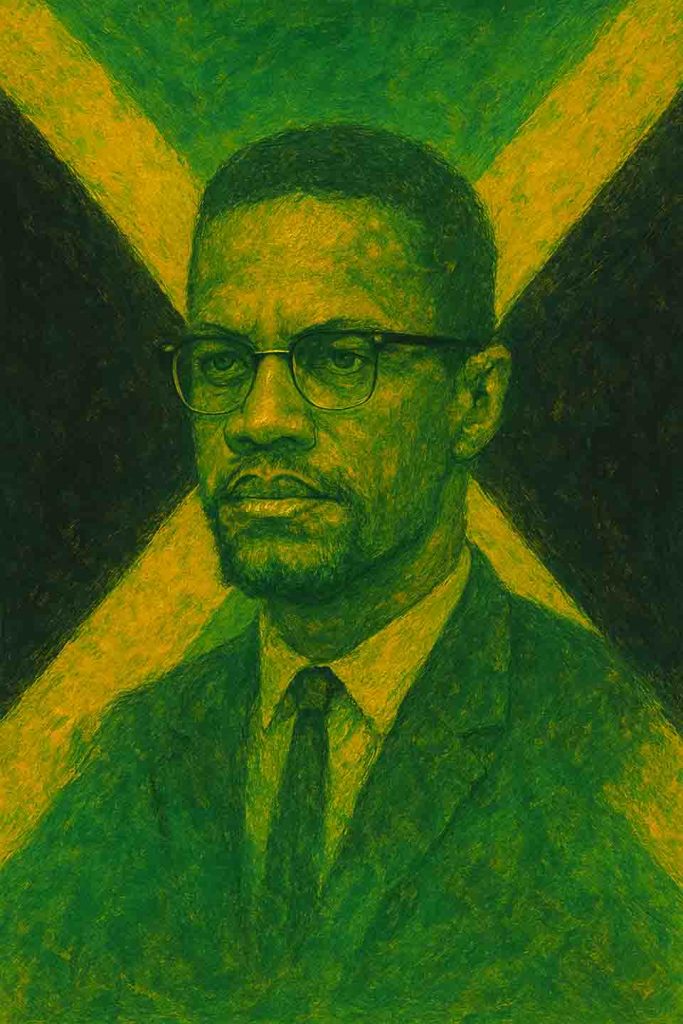
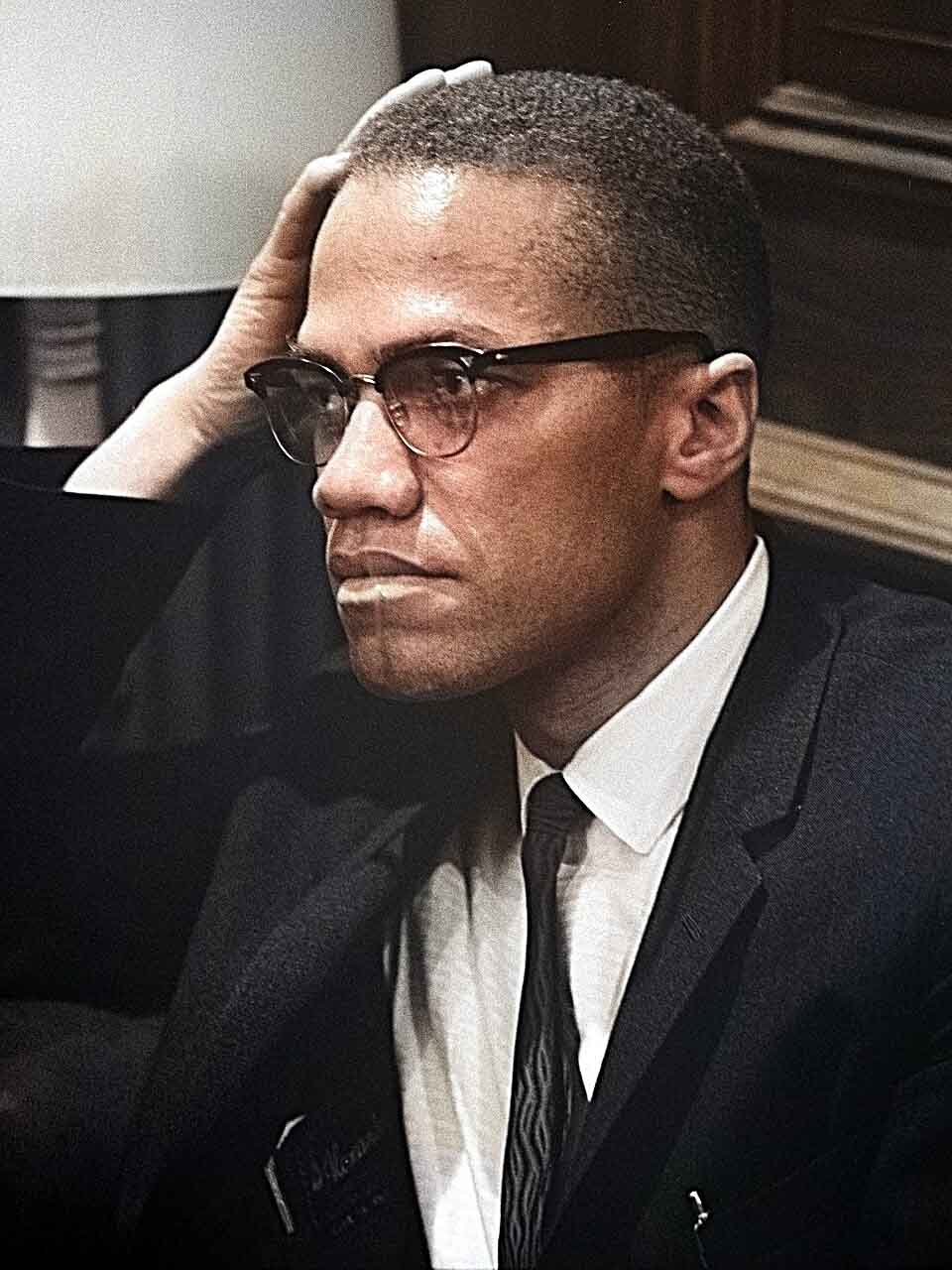
Malcolm X waiting for a press conference to begin on March 26, 1964 – Marion S. Trikosko -U.S. News & World Report Magazine Photograph Collection; This image is available from the United States Library of Congress’s Prints and Photographs division under the digital ID ppmsc.01274.